Estimated spare bedrooms
A few examples
Search a place to see how much spare-bedroom capacity it may already have.
Spare Room Estimator
I estimate how much co-living capacity may already exist inside occupied homes by comparing the bedrooms already there with the bedrooms people need.
According to this tool, the United States has over 108 million estimated spare bedrooms in occupied homes.
A few examples
Why it matters
America can increase housing capacity not only by building more homes, but also by making better use of spare bedrooms already inside occupied homes.
In this estimate, a spare bedroom means potential housing capacity inside an occupied home. It does not mean the room is move-in ready today.
FAQ
No. This estimate focuses on occupied homes, not vacant, seasonal, or second homes. For rough context only, a separate back-of-the-envelope estimate suggests about 13 million spare rooms in vacation homes and about 25 million in currently vacant homes. That is not part of the core estimate.
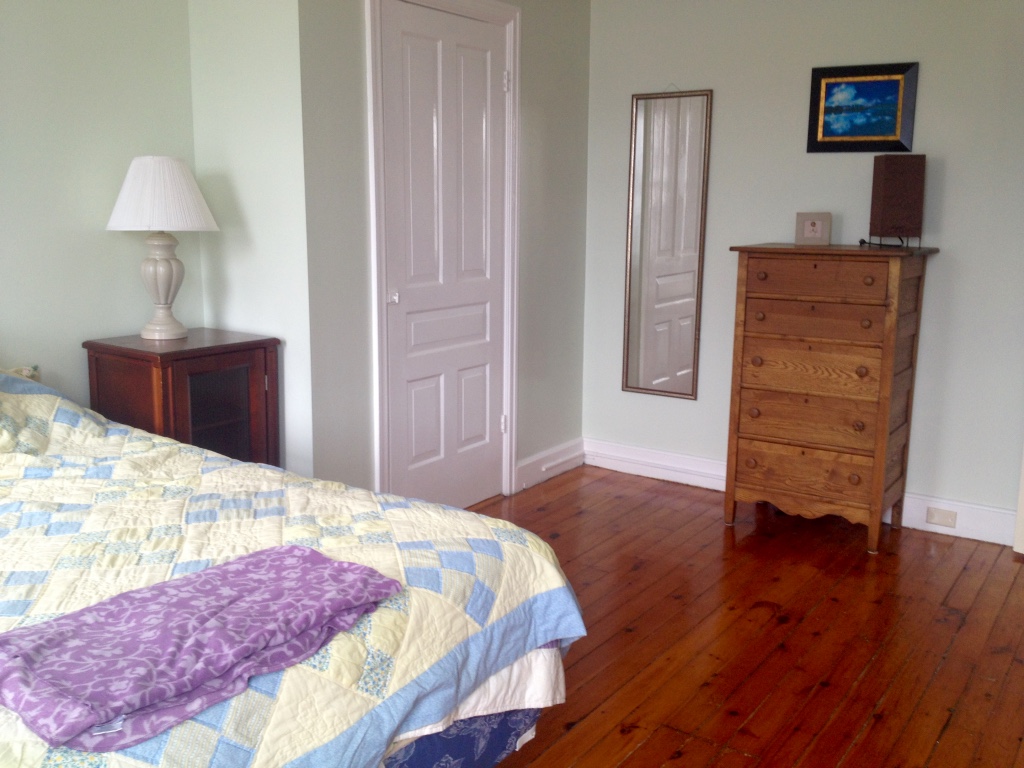
Not necessarily. In this estimate, a spare bedroom means potential capacity, not proof that a room is sitting unused. Some of these rooms are offices, nurseries, guest rooms, hobby rooms, or storage spaces.
A negative result means I estimate more bedrooms are needed than are available in occupied homes under the site’s assumptions. That can happen in places with many couples, children, or other adults sharing homes, or with many smaller units. It does not mean the place has literally “negative bedrooms.” It means the model sees a shortfall.
Studio apartments count as occupied homes if someone lives in them, but they usually count as zero-bedroom units. The ACS counts about 445,280 occupied zero-bedroom units nationwide, so they are real housing but not enough by themselves to drive the overall result. They do not add to the bedroom total the estimator measures.
I built it over the past six months with help from OpenAI's Codex program, which I used as a coding partner while I shaped the assumptions, checked the Census data, and refined the wording. Codex helped speed things up, but the judgment calls were mine.
Not at all. I agree with a lot of the YIMBY case for building more housing, and in many places we clearly need more construction. Yes In My Spare Room is not meant to replace that argument. It is meant to widen it by asking whether the housing conversation should also pay more attention to the bedrooms that already exist inside occupied homes.
It depends. Co-living, boarding, and other shared housing arrangements used to be very common in American life, but many places now restrict them through occupancy limits, zoning rules, leases, or HOA policies. If your area makes shared housing unnecessarily difficult, a constructive response is to encourage local and state leaders to make these arrangements easier and more workable.
Some of it comes from household choices, and some of it comes from the built environment. Families may decide that siblings can share a room. Homeowners may convert underused attics, basements, offices, or dens into legal bedrooms. Builders and renovators can design homes with future boarders, relatives, or roommates in mind. And local governments can help by allowing more flexible shared housing arrangements.
These are estimates, not a literal room-by-room census. The tool uses recent Census survey data on occupied bedrooms, household structure, and children, then applies transparent assumptions to produce an estimate. The goal is to keep it grounded and useful without pretending to know more than the data can really tell us.
You can of course invite a friend or family member to live in your spare room. Alternatively, you may consider renting it to well-vetted strangers through a room rental platform like PadSplit.
Consider reaching out to members of your network to ask if they know a friend or family member who might have a spare room that could be made available. Alternatively, you can look into room rental platforms like PadSplit.
County Map
This map shows spare bedrooms per 10 occupied households. Click a county for the full estimate; hover to browse quickly.
Legend
Darker colors mean more estimated spare-bedroom capacity per 10 occupied households.
B25042B11016DP02DP05Keep Going
Yes In My Spare Room is meant to be both a measurement exercise and an invitation: to see spare rooms as real housing possibility, to consider shared housing where it makes sense, and to widen the conversation beyond construction alone.
About Andrew

Andrew Berg graduated from Franklin & Marshall College in 2012 with a double major in history and government.
After graduating, he taught middle school science in Baltimore through Teach for America while earning a Master of Education from Johns Hopkins University.
He now serves as Area Director for InterVarsity Christian Fellowship in central Pennsylvania, supervising staff, volunteers, and student leaders at fifteen colleges.
Andrew has practiced co-living in a variety of forms. Whether through short-term visits or long-term guests, he has experienced the highs and lows of shared housing and still loves it.
He also wrote about the idea in Plough: Yes In My Spare Room.
For more on the argument behind Yes In My Spare Room, or on Andrew's experience with shared housing, visit the Yes In My Spare Room Substack blog.
Questions, feedback, or media inquiries? Reach Andrew through the Yes In My Spare Room Substack blog or on LinkedIn.